
How Ricova automated its bilingual complaints and dispatch desk with Vatel's AI voice agent
By replacing its manual reception processes with two Vatel AI voice agents integrated directly into its Webex telephony, Ricova automated the handling of 185 calls and 400 minutes of conversation per month. Built in 4 weeks, these intelligent agents qualify requests and instantly send a structured email to the departments concerned. This transition reduced processing delay to 0 minutes between the call and team notification, freeing valuable secretary hours while offering fluid, instant bilingual coverage.
185 end-to-end calls per month
400 minutes of conversation per month
0 minutes (automated transmission)
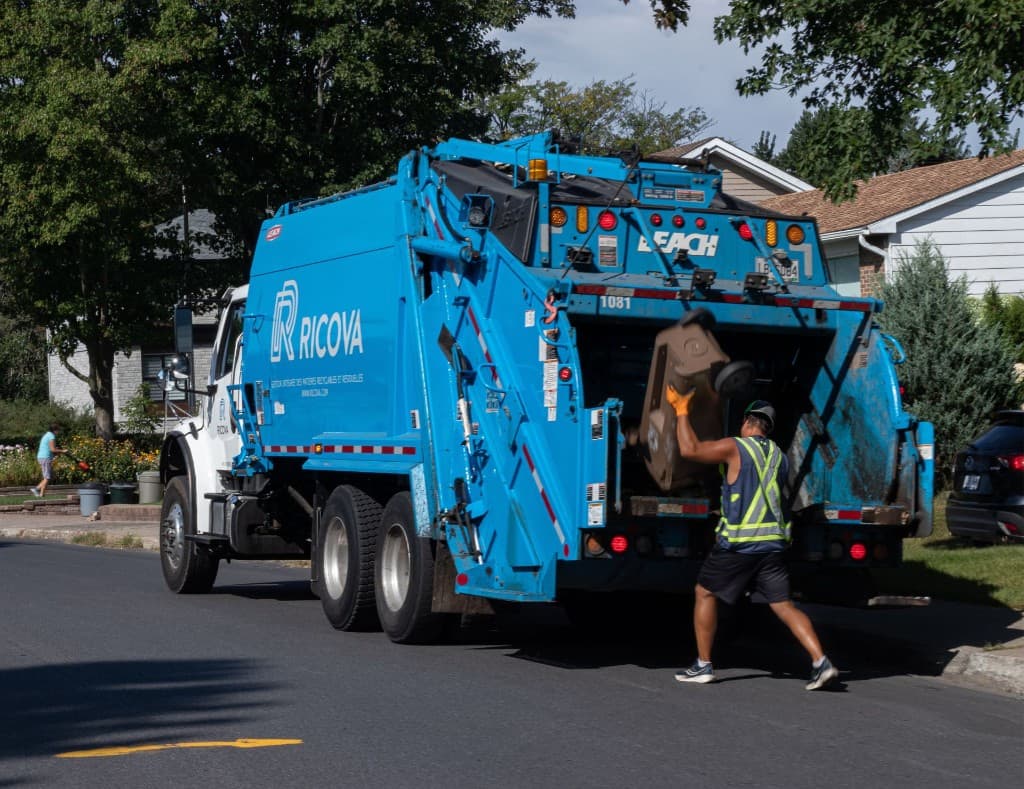
Ricova
Ricova is a large Quebec waste and residual materials management company serving bilingual (French and English) customers across the province.
A desk saturated by repetitive, rigid reception calls
Ricova faced a high volume of inbound calls for two main reasons: customer-complaint intake and service-request dispatch. Without intelligent automation, all of these calls sat on the company receptionist, creating several bottlenecks:
- Administrative time drain: the receptionist had to spend hours running repetitive conversations that always followed the same script (collecting contact details, clarifying the complaint or request, identifying the responsible team).
- Information-transmission delays: after taking the request details by phone, the receptionist had to type and relay notes manually by email or internal chat. That manual process created a delay between the moment the customer formulated the request and the moment the operations team could review it and intervene.
- Bilingual-management complexity: because Ricova's customer base is made up of French and English speakers, the desk constantly had to identify the customer's language, route them to the right contact, and qualify the request. That manual handling added a significant daily operational load.
Two specialized AI virtual agents integrated with Webex
To eliminate these operational frictions, Vatel structured a solution based on two distinct, specialized voice agents: one for complaints and one for dispatch, rather than a single general assistant. This architecture keeps each conversation focused and automates post-call emails directly to the responsible teams. Full implementation was completed in 4 weeks:
- 01Week 1
Discovery
Full audit of the receptionist's call flow, detailed mapping of the questions required for complaint intake and dispatch, and a technical review of the existing Webex extension structure.
- 02Weeks 2 and 3
Development
Programming and training of the bilingual complaints agent and the bilingual dispatch agent. Configuration of automatic email-sending rules (via Resend) and integration of call-transfer logic.
- 03Week 4
Testing & Deployment
Integration of the assistant into the existing Webex voice menu as internal phone extensions, live call testing, and validation of immediate email receipt.
Instant operations notification and automated bilingual service
Since launching the two Vatel AI voice agents, Ricova has fluid, high-performing phone reception available at all times.
| Key indicators | Before Vatel | After Vatel's AI voice agent |
|---|---|---|
| Monthly volume handled by the AI voice agent | 0 calls (100% manual handling) | 185 end-to-end calls per month |
| Automated reception time | Full desk overload | 400 minutes of conversation per month |
| Information-transmission delay | Variable (manual entry and transfer) | 0 minutes (automated transmission) |
| Language handling (FR/EN) | Manual triage by the receptionist | Fluid bilingual detection and transition |
High-level triage fluency
To reach this level of efficiency, Vatel's two voice agents rely on bilingual, connected reception logic, executing every triage step in real time:
- Natural bilingual detection: The AI detects the caller's language from the first sentence (French or English) and conducts the entire conversation in that language, without forcing the user to press a key.
- Instant email notifications: As soon as the caller hangs up, the AI compiles and structures the request information (name, number, address, description) and automatically sends a formatted email to the responsible department, reducing processing delay to zero.
- Seamless Webex integration: Living directly as extensions of Ricova's Webex system, the virtual agents can transfer the call fluently and warmly to a real employee when needed.
Reinvesting human capital in complex cases
By delegating repetitive first-level intake to Vatel's AI voice agent, Ricova succeeded in radically accelerating the handling of its dispatch requests and complaints. Ricova's administrative staff can now step away from high-repetition routine calls and focus on resolving complex customer issues and high-level coordination.
More customer stories
See all cases




FAQ
We've shared some of our most frequently asked questions to help you out. Can't find the answer you're looking for?
Vatel's AI is designed to listen to and analyze the acoustic and semantic signature from the caller's first exchange. Unlike rigid phone systems that ask callers to press “1” or “2” to choose a language, Vatel's bilingual assistant instantly understands whether the user is speaking French or English and makes a natural transition to that language for the rest of the call. That removes any technological barrier and makes reception accessible to everyone.
Vatel's virtual agent is configured to integrate seamlessly and natively with your Webex system's PBX as internal phone extensions. The AI slots directly into your existing IVR (interactive voice response) menu. It can therefore receive calls transferred by your receptionists, or conversely perform fluent call transfers to any employee or physical department in your organization without dropping the line.
Yes, absolutely. As soon as the caller hangs up, Vatel's AI processes the conversation in real time, extracts the important details (contact information, complaint details, dispatch address), and uses high-performing integrations (such as Resend) to automatically send a formatted, structured email to the responsible team. There is exactly 0 minutes of delay between the end of the call and receipt of the email by your operations team.
Deploying a dedicated agent per request type (one for complaints and one for dispatch) keeps each script and each decision-tree logic extremely precise and high-performing. The complaints AI is optimized to calm and reassure the caller while extracting dispute details, while the dispatch AI is programmed to validate pure logistics criteria. This separation guarantees that post-call emails are routed instantly and without error to the right respective departments.